The Master Alarm Database -Boosting Efficiency in Alarm Rationalization

Alarm Rationalization
PROCESSVUE

Views

THE MASTER ALARM DATABASE:

Alarm Rationalization with a Master Alarm Database

JAMES FOX
APRIL 2025

Alarm rationalization is essential to industrial control system safety and a core requirement of standards like ISA-18.2 and IEC 62682. Yet many teams still rely on Excel, a tool not built for the complexity and scale of modern alarm documentation.

In this post, we’ll show how using a Master Alarm Database like ProcessVue Guardian can dramatically improve the efficiency, traceability, and compliance of your alarm rationalization process.

Alarm Rationalization

What is Alarm Rationalization?

Before diving into these benefits, let’s have a quick look at what alarm rationalization and documentation entail and why they are critical to any industrial control system.

How ISA-18.2 Defines Alarm Rationalization

In ISA-18.2, alarm rationalization is described as the process of reviewing potential alarms against the site’s alarm philosophy to decide which should be implemented and to document the reasoning for each.

In simple terms, alarm rationalization is about ensuring that alarms in industrial environments, like power plants, water treatment facilities, data centers and oil & gas, are meaningful, actionable, and correctly prioritized.

ISA-18.2 compliance reporting is covered in depth here.

Why Alarm Rationalization Requires a Master Alarm Database

It aims to improve operator effectiveness and plant safety.

The documentation aspect refers to recording the results of the rationalization process.

Standards like ANSI/ISA-18.2 and IEC 62682 require that every rationalized alarm’s attributes are meticulously documented, from alarm type and priority to operator actions and consequences of inaction.

What Goes Into a Master Alarm Database

Typical examples of fields that need to be documented include

This documentation becomes part of the Master Alarm Database, a living record maintained for the life of the alarm system.

ISA-18.2 Compliance: The Limitations of Excel in Alarm Management

Based on the companies I have worked with over the years, in my experience most people who have already embarked on an alarm management improvement journey to help increase their level of compliance with ISA-18.2 standards or other available alarm management standards and guidelines (IEC:62682 and EEMUA191), will have at some point opted to use Microsoft Excel as their MADb of choice, and those who haven’t started will probably be considering it.
 

Why? Because the chances are their company will have licenses of Excel on hand and may also have a copy of their alarm configuration in a CSV file format, making it easy to get started on rationalizing their alarms without incurring any financial burdens.

But the truth is, Excel simply isn’t designed to handle the complexities of ISA-18.2 alarm rationalization. Let me explain.

Excel vs Master Alarm Database: Why Format Matters

Excel uses a grid-based system, storing information in rows and columns.

While it works well for straightforward data entry, it becomes cumbersome when dealing with hundreds or thousands of alarm fields to manage. 

Need to copy non-adjacent fields? Excel will facilitate the copy, but it won’t let you paste them into equivalent non-contiguous fields, making simple tasks frustratingly difficult.

In contrast, a dedicated MADb like ProcessVue Guardian treats each field independently. 

You can copy any field to another with ease — assuming the data type matches — and even copy multiple fields simultaneously. 

Rationalizing one alarm and applying its configuration across hundreds of others becomes a breeze, saving significant time and effort.

Time-Based Alarm Event Monitoring

Copying Alarm Configurations Across Devices with a MADb

This is where a Master Alarm Database has the advantage, it’s a database. Which means your alarm configuration isn’t stored in contiguous cells.

You can access and work with each field individually. You can copy any field of an alarm to any other assuming it’s the same data type (Guardian performs logic data checks).

This makes it easy to copy configuration from one alarm to other similar alarms. In fact, ProcessVue Guardian lets you copy multiple fields during the copy process.

This means that you can rationalize a single alarm and then copy as much of that alarm’s configuration as you want across as many alarms as you need.

Imagine a scenario, where you have a hundred pumps with alarms to rationalize. You could rationalize one of them and copy the rationalized alarm configuration to the other 99 alarms saving you time and effort.

Bulk Editing in a Master Alarm Database

With ProcessVue Guardian, bulk edits are another game-changer.

Instead of scanning through Excel rows, trying to spot common fields across hundreds of tags, Guardian presents you with a list of shared fields and lets you update them all in a single pass.

It’s faster, clearer, and far less prone to human error.

Using Alarm Templates to Streamline Rationalization

When rationalizing alarms and documenting the rationale for them in accordance with ISA-18.2 alarm management, it’s not uncommon to find similar types of alarms that could benefit from information you have already entered for previous alarms of the same type.

If using excel you could attempt to copy the information from the earlier tag if you can find it, or you could keep a list of common responses and information that you can use to copy and paste the information into, again this a manual task and is prone to human error.

ProcessVue Guardian allows you to create alarm object definitions which contain the information associated with specific types of alarms, such as a storage tank, motor, or pump.

You can rationalize and document one of these alarms and save the information as an alarm template, this template can be used to automatically populate synergistic alarms as you carry out your rationalization, speeding up your ISA-18.2 alarm rationalization activities.

User Roles and Alarm Segregation in a Master Alarm Database

Alarm segregation is another area where a MADb shines. In Excel, restricting access to alarms for different systems or teams is difficult at best.

When you grant access to an excel file, the user is granted full access to the information within.

Sure, you can copy alarms to different worksheets, hide columns and tabs, but this is a manual process and applied globally introducing additional setup time and challenges to rationalization activities.

ProcessVue Guardian addresses this with project-based segregation. Projects are created, tags are added and users assigned to roles (Reviewer or Approver) and can only access projects they are part of, ensuring better control and security.

Managing Change with Traceability in a MADb

Whilst alarm changes can be carried out through a medium like excel, there is no traceability of who made the change and why, or if it was even considered.

If you want to record this information it must be done manually and for every change, this soon becomes unmanageable when dealing with large numbers of alarms.

A robust approval workflow is built into ProcessVue Guardian.  All changes to alarm configurations have to be approved before being deployed, this demonstrates that all changes are reviewed and considered.

Reviewers make changes, Approvers sign them off, and every change creates a new draft that is stored in the database.

This makes it easy to evidence that change management is in operation for all of your alarm configuration changes.

Audit Trails for Full Transparency

Audit trails provide a level of traceability that Excel simply cannot offer.

ProcessVue Guardian logs every change, allowing you to track actions either by project or across the entire lifecycle of the alarm system.

Aligning Alarm Rationalization with Your Alarm Philosophy

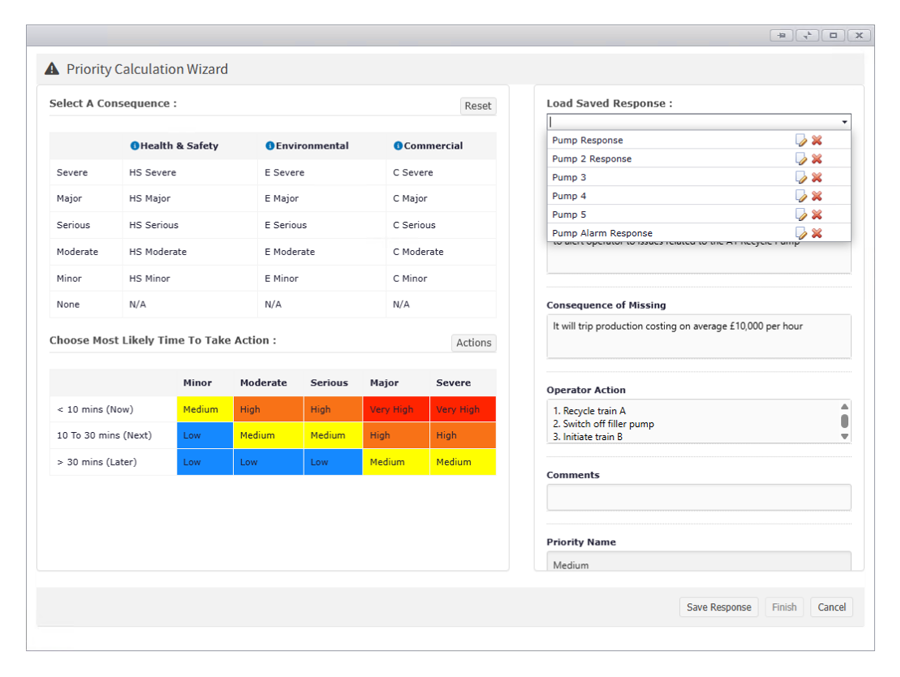
Another invaluable benefit of a Master Alarm Database like ProcessVue Guardian is its ability to embed sections of your alarm philosophy directly into the rationalization process.

For example, priority methodologies can be incorporated into the system, ensuring that users have the information to rationalize alarms without having to consult the sites’ philosophy on alarms, and it ensures every user applies the same criteria when determining alarm priorities.

This promotes a consistent approach to ISA-18.2 alarm management, regardless of who is performing the rationalization.

With this kind of structure in place, you can ensure that everyone rationalizes alarms in accordance with the company’s established alarm philosophy. 

Whether it’s setting response times, identifying probable causes, or defining operator actions, the MADb acts as a guiding framework that helps prevent subjective decision-making and reinforces best practices across the board.

Why It’s Time to Replace Excel with a Master Alarm Database

While Excel may seem like an accessible entry point into alarm rationalization, the reality is that its limitations quickly become apparent. 

A dedicated Master Alarm Database like ProcessVue Guardian not only streamlines the process but also ensures accuracy, security, and traceability every step of the way.

For anyone serious about effective alarm management, the choice is clear.

Thank you for following along in this series. I hope it has shed some light on the incredible value a MADb can bring to your alarm management processes. 

If you’re considering making the switch or want to dive deeper, I encourage you to explore further. Trust me, your future self will thank you.

ISA-18.2 © International Society of Automation. Concepts referenced here are summarized for educational discussion. ProcessVue is not affiliated with or endorsed by ISA. 

If you have any questions about this blog post, speak to one of our friendly, experienced team

Your Alarm Management Journey – Let’s Get Started!

Your Alarm Management Journey
PROCESSVUE

Views

Industrial Alarm Management: A Practical Quick Start Guide

Laurent Bourrouilhou

March 2025

Industrial alarm management is the process of designing, operating, and continuously improving your alarm system so operators receive timely, relevant alarms that support safe and efficient operations. 

For most industrial sites, the starting point isn’t a full system overhaul, it’s a structured set of steps that deliver visible results quickly, build internal confidence, and keep the improvement programme moving. 

This guide gives you that starting point.

Why Industrial Alarm Management Matters

Industrial alarm management is often seen as the weak link in modern operations. Yet, improving your alarm management system can deliver measurable ROI and boost safety.

Here, we cover how companies can get started on their journey to alarm management excellence.

Your Alarm Management Journey

Your Alarm Management Quick Start Roadmap

A well-designed alarm management system exists to prevent processes from entering abnormal situations that are not only a potential hazard but could also result in quality issues, equipment damage and unplanned downtime. And it’s not just about profits. It’s also about people. Because a good alarm system allows for:

However, the prospect of cleaning up an alarm system, or “rationalizing an alarm system” (as people familiar with alarm management would say) can be seen as a daunting and costly task which often ends up being postponed.

Without rationalizing, the inefficiency of the alarm system will contribute to a reactive management of your operations year after year, meaning automatic shutdowns and the triggering of safety systems become common practice.

Of course, alarm management excellence is a long journey, but, as with every journey, what matters is to get started and to keep walking at a comfortable pace, because every step will provide tangible results. 

Alarm Management is after all a journey, not a destination!

Time-Based Alarm Event Monitoring

Choosing Your Route: Internal Team vs Software Partner

There are two routes aspiring companies looking to take back control of their alarms can take.

They can enlist the assistance of an experienced alarm management software provider (AMS) or form an alarm management taskforce within the company.

Both routes are viable.

One will provide a fast track to getting your alarms under control, whereas the in-house route will involve learning experiences and will take a more scenic approach, learning as they go.

Whichever route is taken though, the journey will follow the same path:

  • Step 1 – Review Your Alarm Management Philosophy Document

    The starting point for improving any alarm management system is reviewing your alarm philosophy document. If you don’t have one, you should seriously consider implementing one.

    It’s the foundation for a successful implementation of alarm management, setting out the key principles required for designing, implementing, and maintaining an alarm system.

    It serves as a reference guide for all personnel involved in the alarm management process and also helps to ensure that alarms are used effectively and efficiently, and that they do not contribute to overloading the operator with alarms.

    If you have one, it should be reviewed to ensure that it is relevant to your site, to your operations and that it is up to date with the latest revision of the alarm management standards and guidelines.

    Your alarm philosophy document defines the rules for how alarms are designed, prioritised, and maintained across your site. Without it, every decision about alarm configuration is made in isolation.

  • Step 2 – Benchmark Your Alarm Management System Performance

    To plan alarm management improvement activities, it is important to take stock of where you currently reside on the alarm management spectrum.

    This involves acquiring alarm management software such as ProcessVue Analyser which will enable you to benchmark your alarm system against the alarm management industry standards and guidelines (ISA-18.2, EEMUA191 and IEC62682).

    It will provide focus, allowing you to tackle your problem areas such as chattering and fleeting alarms and will help ensure you get the most success from your actions.

    The results of this step will then go on to form the base line with which to measure the success of your alarm management improvement activities.

    Benchmarking establishes your baseline , how many alarms your operators are managing per hour, which are the most frequent offenders, and how your system compares against industry standards such as EEMUA 191 and ISA-18.2.

    Without a baseline you can't measure progress, and without measuring progress improvement stalls.

  • Step 3 – Reduce Nuisance Alarms in Your Alarm Management System

    Through generating most frequent reports at a regular cadence (weekly, fortnightly, or monthly) you can identify nuisance alarms and take action to reduce them – this could involve addressing maintenance issues, or resetting the parameters which trigger them.

    It should not be understated what this simple process can do to help reduce the overall alarm load on your operators.

    ProcessVue Analyser is equipped with nuisance alarm activity worklists enabling you to assign nuisance alarms to responsible personnel who can track their remediation activities within the software.

    This provides two benefits: it allows you to demonstrate a continuous improvement process through the audit trail, and it acts as a knowledge base allowing you to reduce mean time to repair on repeat offenders.

    Nuisance alarms, chattering, fleeting, and stale alarms that trigger repeatedly without requiring action, are the most immediate drain on operator attention.

    Tackling your top ten nuisance alarms first delivers visible results quickly, builds stakeholder confidence, and frees operators to focus on alarms that genuinely matter.

  • Step 4 – Analyze Alarm Patterns and Dependencies

    Over time, with the volume of alarms being reduced through nuisance alarm remediation you will be presented with the opportunity to start looking for relationships between alarms and patterns in the reports.

    And then matching those patterns to what else is happening in the environment, such as an unidentified problem with a pump causing issues under certain load conditions.

    By recognising the changes in alarm loads, it is possible to identify potential causes and organise appropriate remedial action and apply advanced alarm handling techniques.

    These steps can set the operator on a course towards taking their system from its default configuration, which was set when the system was commissioned, on towards a bespoke system, tuned to the requirements of your operation, further fine-tuned by the realities of operation.

    Once nuisance alarms are under control, the next step is understanding why alarm floods occur.

    Analysing patterns and dependencies reveals which alarms cluster together, which cascade from a single root cause, and where your system is generating noise rather than insight.

    This is where a Master Alarm Database becomes essential, it gives you the structured data to make those decisions with confidence.

    Again, those familiar with alarm management will know this as documentation and rationalisation of alarms.

If you’re evaluating alarm management software to support this process, you can explore ProcessVue’s alarm management solutions here.

Documenting and Rationalizing with a Master Alarm Database

A Master Alarm Database which provides an efficient route to rationalisation and documentation is desired here, especially when dealing with hundreds or thousands of alarms.

A good Master Alarm Database application like ProcessVue Guardian will provide batch editing functionality allowing you to effect changes across hundreds or thousands of alarms in a single pass, while the workflow will ensure all changes are approved before being deployed.
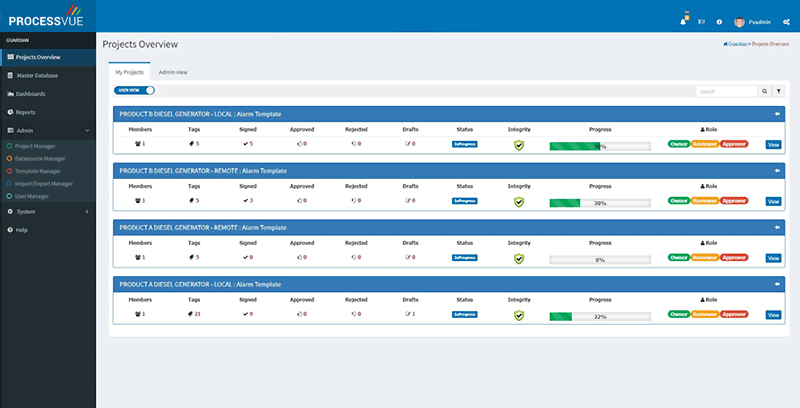
Guardian’s welcome screen with the list of on-going projects and their completion status

Keeping Momentum: Turning Quick Wins into Continuous Improvement

Implementing a structured industrial alarm management process provides long-term benefits: increased safety, better compliance, and optimized operations.

Whether using advanced alarm management software or building internal capability, each step in improving your alarm management system brings you closer to operational excellence.

Productivity features and the ability to split the work into chunks that can be completed fast is our contribution to the “journey” – helping to keep teams motivated, probably the key success factor of an alarm management project.

Fast and visible results demonstrate to the stakeholders at every level in the organisation that poor alarm management can be addressed, step by step.

How do you eat an elephant? One bite at a time.

So… let’s get started!

Alarm Management - Let’s get started!

Industrial Alarm Management Quick Start FAQ

Q1: What is industrial alarm management?

Industrial alarm management is the process of designing, operating, and improving an alarm system so operators receive timely, actionable alarms that help prevent abnormal situations.

Q2: What’s the first step in an alarm management improvement project?

Start with your alarm philosophy document (or create one). It sets the rules for how alarms are configured, prioritized, maintained, and reviewed.

Q3: What are nuisance alarms?

Nuisance alarms are alarms that repeatedly trigger without requiring action, often chattering, fleeting, or persistent alarms, creating noise that can mask critical alarms.

Q4: How do you measure alarm system performance quickly?

Benchmark your alarm rates and top offenders, then establish a baseline. Use it to prioritize fixes and track improvements over time.

Q5: What is alarm rationalization?

Alarm rationalization is the structured review of alarms to confirm purpose, priority, setpoints, operator response, and documentation, often managed through a Master Alarm Database and workflow.

Q6: How often should we review alarm performance?

Many teams start with weekly reviews for nuisance alarms and monthly reviews for broader performance and trends.

If you have any questions about this blog post, speak to one of our friendly, experienced team

+44 (0)1246 733120

How a Master Alarm Database Prevents Unauthorised Alarm Changes

Workers discussing industrial change management
PROCESSVUE

Views

How a Master Alarm Database Prevents Unauthorised Alarm Changes

JAMES FOX
FEBRUARY 2025

In my last blog, part of a series exploring the features and benefits of the Master Alarm Database (MADb), we examined who should use a MADb, why they should use one, and when to derive the most value. 

Continuing the series, this blog focuses on how the Master Alarm Database (MADb) helps industrial teams control alarm configuration changes, prevent unauthorised modifications and maintain a reliable single source of truth for alarm management.

In industrial operations, even small changes to alarm settings, limits or priorities can create operational, safety and compliance risk if they are not reviewed and approved. Without proper change control, unauthorised alarm configuration changes can go unnoticed until they create nuisance alarms, missed alarms, maintenance issues or production disruption.

This is why change management is central to effective alarm management.

Workers discussing industrial change management

Why a Master Alarm Database Matters for Change Management

In the competitive industrial manufacturing landscape, where efficient operations can determine success or failure, optimized alarm configurations are critical. 

A company’s reputation is often measured by its environmental impact and operational efficiency.

Implementing effective alarm configurations ensures facilities operate efficiently and cost-effectively, helping businesses stay ahead.

However, deviations from approved alarm configurations can have significant reputational and financial consequences. 

Unauthorized changes can increase operating costs, impact maintenance and safety, and disrupt operations.

What may seem like a minor adjustment can trigger a cascade of inefficiencies, resulting in financial and operational nightmares.

The Hidden Risk of Unauthorised Alarm Configuration Changes

Imagine a seemingly minor adjustment to an industrial control system, such as a small change in a production line’s temperature setting or the unapproved modification of a motor’s speed. 

Initially, everything appears normal. But over time, energy consumption rises, equipment underperforms, and production efficiency declines. In worst-case scenarios, these inefficiencies may lead to operational disruptions.

Beyond energy costs, inefficient configurations result in suboptimal performance. 

Machines running outside their ideal parameters experience accelerated wear and tear, leading to increased maintenance expenses and reduced lifespan. 

In some cases, improper configurations cause frequent breakdowns, forcing companies to allocate substantial budgets for repairs and replacements.

Product quality is another key concern. Incorrect system configurations can cause defects, leading to costly rework or wasted materials. 

For example, an incorrect pressure setting on a production line could result in defective products, increasing material waste and operational downtime.

The Cybersecurity Risk Behind Unauthorised Control System Changes

Unauthorized changes are not always internal actions. Cybersecurity threats are a growing concern, as malicious actors can introduce inefficiencies to disrupt operations.

 Attackers gaining unauthorized access to control systems may manipulate configurations, making tracing disruptions challenging. 

This highlights the need for secure control systems to prevent both intentional breaches and unintended misconfigurations. 

cybersecurity expert

How Alarm Management Standards Treat Unauthorised Changes

Given the potential impact of unauthorized changes, it is no surprise that alarm management standards emphasize their importance. 

The ISA-18.2 standard, for instance, considers the number of unauthorized alarm configuration changes as a key metric for assessing alarm management commitment.

Without proper monitoring, identifying and investigating these changes becomes impossible.

How a Master Alarm Database Reduces Unauthorised Change Risk

To prevent costly inefficiencies, robust access controls must be in place. Every control system change should be logged and authorized by appropriate personnel. 

In my experience many SCADA and DCS systems lack detailed audit trails for MOC, providing only basic details like who made a change. 

The absence of contextual information often necessitates cumbersome manual documentation processes, delaying approval and implementation.

However, these traditional approaches fall short in identifying unauthorized changes, making it difficult to take corrective action. 

This is where a Master Alarm Database like ProcessVue Guardian can significantly improve change management procedures.

How ProcessVue Guardian Supports Master Alarm Database Change Management

ProcessVue Guardian serves as the central repository for alarm configurations, enabling structured and secure change management through several key features:


  • Comparing the Master Alarm Database with Live Systems

    Once alarm configurations are imported into ProcessVue Guardian, rationalized, and deployed, a comparison can be performed between the MADb and the live system.

    By exporting the running alarm configuration and re-importing it into Guardian, users can highlight unauthorized changes and investigate them. If necessary, these changes can be rolled back, preventing unnecessary wear and tear on operations.

    For example, by exporting the running alarm configuration and re-importing it into Guardian, users can highlight unauthorised changes and investigate them.

  • Approval Workflow for Controlled Changes

    An approval workflow ensures that alarm configuration changes undergo review and authorisation before deployment. Changes must be assessed and approved by designated personnel.

    Only approved changes can be implemented, ensuring that all modifications are considered before application.

  • Projects for Structured Alarm Management

    ProcessVue Guardian utilizes projects to structure alarm rationalization and documentation activities.

    Projects allow segmentation of alarms and restrict access to authorized personnel, ensuring only designated users can modify configurations. This enhances security and accountability in alarm management.

  • Comprehensive Audit Trails

    Every alarm configuration change is automatically recorded, detailing who made the change, what was modified, and when the change occurred. This full audit trail simplifies compliance reviews and enhances transparency in MOC practices.

  • Version Control for Tracking Changes

    ProcessVue Guardian employs a robust version control system, applying both minor and major version numbers to alarm configurations.

    Minor versions track iterative changes, while major versions indicate full deployments. This systematic tracking enables users to monitor and manage configuration history effectively.

How a Master Alarm Database Strengthens Alarm Governance

Industrial engineers play a crucial role in optimizing systems to maximize efficiency and minimize costs.

Inefficient configurations pose a silent yet significant threat, potentially leading to severe financial and operational consequences. 

By using a Master Alarm Database such as ProcessVue Guardian as the controlled source of truth for alarm configurations, organisations can strengthen management of change, identify unauthorised modifications and maintain a clear record of approved alarm settings.

With ProcessVue Guardian, facilities can ensure a structured, secure, and efficient approach to alarm management, enabling them to stay ahead in an increasingly competitive industrial landscape.

If you have any questions about this blog post, speak to one of our friendly, experienced team

+44 (0)1246 733120

Master Alarm Database – What, Why and When?

What is a Master Alarm Database (MADb)?
PROCESSVUE

Views

Master Alarm Database: What It Is, Why You Need It, and When to Implement

JAMES FOX
JANUARY 2025

A Master Alarm Database (MADb) is a centralised system that stores your alarm configurations, settings, and all associated information, cause, consequence, priority, and operator response, in one place.

For organisations managing complex industrial alarm systems across multiple sites, it’s the foundation of consistent, compliant alarm management.

If you’re asking whether you need one, the answer is almost certainly yes.

The question is when to implement it and what to expect when you do.


These are all excellent questions and make a perfect topic for a blog. So, here we are on a cold winter’s morning in January.

Over the next few months, I will write a series of blogs focusing on the Master Alarm Database (MADb) and the benefits it brings. 

I will use ProcessVue’s Master Alarm Database (ProcessVue Guardian) to help illustrate my points, as it’s the Master Alarm Database I am familiar with and have easy access to. 

A brief introduction to ProcessVue Guardian is warranted to set the scene.

ProcessVue Guardian can be described as a Master Alarm Database that provides a centralized, compliance-focused alarm management platform. 

It is designed to help and streamline the lifecycle of alarms within industrial or process control environments, including pharmaceutical, oil & gas, chemical processing and power generation industries to name but a few.

What is a Master Alarm Database (MADb)?

What is a Master Alarm Database (MADb)?

A MADb is a database of your alarm configurations and their associated settings. It serves as a single point of reference for all alarm-related information. 

Whether you want to know the cause of an alarm, the consequence of missing it, or simply examine its configuration, the MADb provides easy access to that information.

The MADb extracts the alarm configuration from the alarm system and its associated control environment while transforming it into the ideal format for making changes during alarm rationalization.

Because the MADb is a database, it can hold additional information about alarms, information not easily stored in the alarm system such as the supporting details mentioned in the ISA-18.2 Alarm Management Standards. 

Including the cause of an alarm, the consequence of missing it, and the actions operators should take to mitigate the issue. 

This additional information ensures that operators and engineers have a deeper understanding of the alarms, their purpose, and their criticality.

What’s the difference between a MADb and your existing alarm system?

Your existing alarm system, whether that’s a DCS, SCADA, or PLC, manages the live execution of alarms. It triggers them, displays them, and logs them.

What it wasn’t designed to do is store the reasoning behind each alarm: why it exists, what the consequence of missing it is, what the operator should do, and whether it’s still necessary.

A Master Alarm Database sits alongside your alarm system and holds that layer of information.

It’s where you rationalise, document, govern, and maintain your alarm configurations,  independent of the control system itself.

The two work together. The MADb is the source of truth; the alarm system is the execution layer.

Who Should Use It?

MADbs are relevant to all businesses regardless of size, from small and medium-sized facilities to large-scale industrial plants, manufacturing operations and utilities.
A MADb provides value to:
  • Multi-Site Operations:

    Ensures a consistent approach to alarm management practices across multiple locations.

  • Industries with Complex Systems:

    Supports operations with numerous interconnected systems, such as oil & gas, pharmaceuticals, and power generation.

  • Organisations Focused on Safety, Productivity, and Reputation

    Essential for businesses where mismanagement of alarms can damage operations, profitability, or reputation.

When Should It Be Used?

While a MADb is often introduced at the beginning of an alarm rationalization project, its utility extends across the entire alarm management lifecycle.

A solution like ProcessVue Guardian supports the following lifecycle steps:

  • Alarm Identification and Prioritization

    Helps classify alarms based on importance and compliance requirements.

  • Alarm Rationalization

    Facilitates efficient review, modification, and optimisation of alarm configurations promoting a standardised approach.

  • Operations

    Facilitates an alarm response manual, providing guidance to operators when less frequent alarms annunciate, that same information can be used to form the basis of operator training.

  • Ongoing Maintenance and Compliance

    Serves as the central repository for all alarm-related information, ensuring consistency, compliance, and continuous improvement.

Why Is It Important?

The importance of a MADb cannot be overstated. Alarm mismanagement can lead to alarm floods, missed critical events, and, ultimately, safety incidents or operational inefficiencies. 

A MADb not only mitigates these risks but also drives improved productivity, regulatory compliance, and standardization.

By centralizing alarm information, facilitating rationalization, and supporting compliance, a MADb ensures that businesses can focus on proactive alarm management rather than firefighting issues.

In the coming blogs, I will dive deeper into specific aspects of the Master Alarm Database, exploring how ProcessVue Guardian assists with efficient alarm rationalization, the standardization of alarms and management of change.

Stay tuned as we explore the transformative power of a well-implemented MADb.

FAQ

What is a Master Alarm Database (MADb)?

A Master Alarm Database is a centralized system that stores alarm configurations, settings, and associated information. It helps ensure standardization, supports rationalization, and improves alarm lifecycle management across industrial systems.

How does a MADb improve alarm management?

A Master Alarm Database (MADb) supports improved alarm management by enabling better prioritization and helping to reduce alarm floods through structured rationalization.

It also ensures alignment with standards such as ISA-18.2 by maintaining key metadata like alarm cause, consequence, and operator response.

When should a MADb be implemented?

Ideally, a MADb should be introduced at the start of an alarm rationalization project, but it provides ongoing value throughout the alarm management lifecycle,  from operations to compliance and training.

If you have any questions about this blog post, speak to one of our friendly, experienced team

+44 (0)1246 733120

The Key to Standardized Alarm Management

PROCESSVUE

Views

The Master Alarm Database:

Critical Alarm Management Starts With a Single Source of Truth

JAMES FOX
NOVEMBER 2024

Introduction

Critical alarm management isn’t just about responding faster, it’s about ensuring that when a high-priority alarm fires, every operator across every site knows exactly what it means and what to do. 

The breakdown usually happens earlier: inconsistent priorities, different descriptions for the same alarm type, and no single system governing what “critical” actually means across the enterprise. 

A Master Alarm Database (MADb) solves this at the source. 

There are many benefits to implementing a Master Alarm Database, in this blog I’ll focus on the ability it provides to centrally manage your alarms.

Why Critical Alarm Priorities Break Down Across Multi-Site Operations

One of the most immediate benefits of a MADb is its ability to standardize alarms across the entire organization.

Before implementing a MADb, it is common to find variations in how the same types of alarms are described or prioritized from one site to another. 

These inconsistencies often lead to confusion, inefficiencies, and occasionally, delayed responses during critical moments.

With a MADb you can implement a standardized alarm framework. 

Every alarm, regardless of where it’s triggered, is described and categorized in a consistent manner across the whole enterprise with approved sets of alarm response procedures. 

This common language will simplify training, improve operator understanding, and create uniformity in how alarms are perceived and managed.

Having a standardized set of alarms means that anyone in the organization can work with any site’s alarm system confidently, knowing that the alarms follow the same structure. 

It reduces the need to relearn or recalibrate for different sites and ensures that responses to alarms are swift and based on a universal understanding.

Aligning Priorities Across the Organization

Standardization doesn’t just apply to alarm descriptions—it’s equally critical when it comes to prioritization. 

In my experience, before using a MADb companies often face the issue of alarms having different priority levels at different sites, even though they are addressing the same event. 

This lack of consistency causes major operational problems, especially when cross-site coordination is necessary.

With a MADb, companies can align alarm priorities across the entire enterprise. 

This means that critical alarms are treated with the same level of urgency at every location, ensuring consistency in how they handle emergencies or important operational issues. 

Whether a team is responding to an equipment failure, a safety hazard, or a production anomaly, the priority is clear and consistent.

The aligned priorities help eliminate confusion and streamline decision-making. No matter where an alarm originates from, we know exactly how critical it is and can take the necessary actions immediately. 

It’s been cited as a game-changer for improving response times and ensuring that critical alarms are never overlooked.

Diagram showing the ProcessVue Priority Matrix Manager (click image to enlarge)

Tailoring Alarm Priorities for Individual Sites

While standardization and aligned priorities are essential, it’s also important to recognize that not all sites have the same operational demands. 

Each location might follow a unique alarm philosophy based on its specific risks, equipment, or production goals. That’s where the flexibility of a MADb like ProcessVue Guardian really shines.

A MADb which encompasses flexible priority matrixes allows us to tailor the alarm priority for each individual site.

This means that while the structure and framework of alarms are standardized, the priority levels can be adjusted to reflect each site’s unique needs.

What I find most valuable about this system is that you can manage a site’s alarm configuration from a central location with full confidence you are adhering to the site’s specific priority matrix. 

Whether rationalizing alarms, adjusting priorities, or making changes, the system ensures that everything aligns with the site’s tailored alarm philosophy. 

This ability to customize priorities while maintaining standardization makes your alarm management process far more flexible and effective.

Working with Confidence from a Central Location

One of the biggest operational advantages of using a MADb like ProcessVue Guardian is the ability to manage alarms from a central location without losing sight of individual site needs. 

A MADb that doesn’t provide tailored priority matrixes can make it challenging when making modifications remotely because customers cannot always be sure they are applying the correct priorities for each site.

Customers who leverage an MADb like ProcessVue Guardian, can adjust or fine-tune a site’s alarm configuration from head office with complete confidence.

The alarm priority matrix specific to that site is embedded into the system, so any updates or rationalizations they make follow the site’s unique rules. 

This central oversight allows for greater efficiency and eliminates the need for on-site intervention every time a change needs to be made.

Streamlining Alarm Rationalization

The process of rationalizing alarms—ensuring that every alarm is necessary and set at the correct priority level—has become far more streamlined thanks to the MADb. 

In the past, alarm rationalization could be a time-consuming and disjointed process, especially when multiple sites had conflicting configurations.

With a MADb, rationalizing alarms is much more efficient. Companies can now evaluate alarms across the enterprise while respecting each site’s specific alarm philosophy. 

This will help companies reduce unnecessary alarms, cut down on alarm fatigue, and focus on the alarms that truly matter. 

Centralized rationalization also ensures that every alarm configuration adheres to both global standards and local needs.

Alarm Rationalisation

Conclusion: The Power of Central Governance and a Master Alarm Database

Implementing a Master Alarm Database and central alarm management can transform the way a company handles alarms across its organization. 

It brings standardization, ensuring that all alarms follow a uniform structure and are prioritized consistently. 

At the same time, the ability to tailor each site’s alarm priority matrix means that you never lose sight of individual site needs. 

You can work on any site’s alarm configuration with confidence from a central location, knowing that you will be using the correct priority matrix for that site. 

Beyond that, central governance of alarms offers even more benefits. It enhances the overall awareness and understanding of how alarms are configured and managed across the organization. 

Operators, engineers, and decision-makers can all learn from similar alarm setups across sites, which helps identify best practices and allows lessons to be shared and applied universally.

This approach not only improves alarm response times and safety but also enables us to optimize our alarm systems continuously. 

The combined power of central governance and a Master Alarm Database has brought consistency, clarity, and control to alarm management, which has improved both operational efficiency and organizational confidence. 

If you’re looking to streamline alarm systems across multiple sites, I can confidently say that central alarm management paired with a Master Alarm Database like ProcessVue Guardian is a great place to start.

If you have any questions about this blog post, speak to one of our friendly, experienced team

+44 (0)1246 733120

Digitalization: ISA-18.2 and the future of Alarm Management

isa-18.2 alarm management
PROCESSVUE

Views

Digitalization: ISA-18.2 and the future of Alarm Management

JAMES FOX
OCTOBER 2024

Introduction

Alarm management is a cornerstone of safe and efficient industrial operations. 

The ISA-18.2 standard, developed by the International Society of Automation, provides a structured approach to managing alarms in the process industry. 

As the digital age continues to evolve, we’re exploring how digitalization can assist or even revolutionize alarm management, with multiple stakeholders contributing to these efforts. 

In this blog, I’ll explore the principles of ISA-18.2 alarm management and examine how the ongoing exploration of digitalization is being shaped by active contributions from industry experts.

Woman at control centre using ProcessVue alarm management software

The Basics of ISA-18.2

ISA-18.2, officially titled “Management of Alarm Systems for the Process Industries,” was introduced in 2009 and has since become the industry benchmark for alarm management. 

The ISA-18.2 alarm management standard outlines the lifecycle, focusing on key principles such as:

  • 1 - 1. Alarm Rationalization

    Streamlining alarm systems by analyzing and categorizing alarms to minimize unnecessary alerts.

  • 2 - Alarm Prioritization

    Prioritizing alarms based on their criticality to ensure that operators can focus on the most significant issues.

  • 3 - Alarm Suppression

    Temporarily suppressing alarms under specific conditions to prevent alarm floods and operator overload.

  • 4 - Operator Response

    Establishing clear, actionable responses for each alarm to enable timely and effective intervention.

These principles have been instrumental in guiding the industry towards safer and more efficient operations.

However, as technology advances, the exploration of digitalization within the ISA-18.2 framework is gathering momentum, with key industry members actively contributing to this evolution.

How ISA-18.2 Defines Alarm Rationalization and Documentation

For a full overview of the ISA-18.2 alarm management standard and its reporting requirements, see our compliance reporting guide.

What ISA-18.2 Means in Practice

At its core, ISA-18.2 gives organizations a structured framework for managing alarms across the full lifecycle, from philosophy and rationalization through to monitoring, management of change, and audit. 

In practical terms, that means alarm systems should not be treated as a one-time engineering task. They need to be designed, reviewed, measured, and improved continuously so that alarms remain relevant, prioritized, and actionable for operators.

This is also where digitalization becomes useful. Digital tools can help teams apply ISA-18.2 more consistently by improving documentation, standardizing alarm data, supporting rationalization workflows, and making performance easier to review over time. 

Better visibility into alarm rates, standing alarms, operator response, and change history makes it easier to move from reactive alarm handling toward a more controlled and measurable lifecycle approach. 

Rather than replacing the standard, digitalization helps organizations apply ISA-18.2 more effectively across day-to-day operations

Read more about ISA 18.2 Alarm Management Lifecycle

Download our free ISA-18.2 Guide

Digitalization in Alarm Management: A New Frontier

Digitalization, the integration of digital technologies into existing processes, promises to enhance alarm management by enabling greater automation, data-driven insights, and operational efficiency.

Within the context of ISA-18.2, digitalization is still in its exploratory phase, but several promising use cases are emerging, driven by leading alarm management specialists like ProcessVue and other industry experts:

  • 1 - Enhanced Alarm Rationalization

    Digital tools embodying master alarm databases can automate aspects of the alarm rationalization process.

    With the ability to embed key portions of your alarm philosophy documentation they help to enforce standardized and consistent approaches to alarm management.

  • 2 - Advanced Data Analytics

    By applying big data and machine learning, digitalized alarm management systems can detect patterns and trends that may not be visible to human operators.

    This capability could lead to more accurate alarm predictions and early detection of potential issues.

  • 3 - Improved Operator Responses

    Master alarm databases being integrated with HMI’s providing operators with important information about alarms directly in the HMI, such as the authorized responses to alarms and the consequences of missing them.

  • 4 - Insight and reviews of operator actions

    Digitalized alarm management systems providing collaborative environments to facilitate the recording and reviews of operator actions, helping to identify additional operator training opportunities.

  • 5 - Dynamic Alarm Management

    Traditional alarm systems are often static, with predefined thresholds.

    Digitalization introduces dynamic alarm management, where settings can be adjusted in real-time based on current operating conditions, reducing nuisance alarms and improving efficiency.

isa-18.2 alarm management

Active Contributions to Standards and Validation

As digitalization efforts progress, multiple members of the process industry, including ProcessVue, are actively contributing to the development and refinement of alarm management standards and technical reports. 

Our involvement ensures that the exploration of digitalization is grounded in practical, real-world applications. 

By validating emerging use cases and sharing insights from our operational experiences, we help shape the direction of standards like ISA-18.2.

Our contributions are not just theoretical; they are based on rigorous testing and validation of digital technologies in real-world environments. 

This collaborative approach helps ensure that digitalized alarm management solutions are effective, reliable, and aligned with industry needs. 

It also provides a feedback loop that allows us to refine our practices continuously, incorporating the latest innovations while adhering to the core principles of ISA-18.2.

Challenges and Considerations

While digitalization offers significant potential, it also presents challenges that must be addressed:

  • Data Security

    As digitalization increases data collection and analysis, ensuring robust cybersecurity measures is critical to protect sensitive information.

  • Interoperability

    Integrating digital tools with existing systems can be complex. Ensuring that new solutions are compatible with legacy systems is essential for a smooth transition.

  • Standardized Data

    Alarm data must be standardized to allow consistent analysis of data across multiple systems and sites

  • Human Factors

    Digitalization should complement, not replace, human decision-making. Training operators to effectively use new digital tools is crucial for success.

The Future of Alarm Management

As digitalization continues to evolve, the ISA-18.2 standard is expected to incorporate new technologies, guided by the contributions of industry experts. 

This collaborative effort will ensure that digitalized alarm management solutions are safe, effective, and aligned with industry best practices.

Organizations looking to stay ahead should begin exploring digitalization opportunities within their alarm management systems, engage with industry forums, and contribute to the ongoing development of standards. 

Our active participation in these efforts ensures that we are not only adapting to change but also helping to drive it.

Conclusion

The digitalization of alarm management represents a significant opportunity for the process industry. 

By integrating advanced analytics, dynamic management, and remote monitoring, digitalization can enhance operational efficiency, safety, and reliability. 

However, this journey is just beginning, and it requires careful consideration of challenges and implications.

Our active contributions to the development of alarm management standards like ISA-18.2 ensure that these new technologies are validated and refined in real-world settings. 

By staying engaged with these efforts, organizations can leverage the full potential of digitalized alarm management and contribute to shaping the future of the industry.

If you have any questions about this blog post, speak to one of our friendly, experienced team

+44 (0)1246 733120

Boosting Efficiency with Alarm Definition Templates in Alarm Rationalization and Documentation

Viewing alarm definition templates
PROCESSVUE

Views

Alarm Definition Templates for Effective Alarm Rationalization Documentation

JAMES FOX
SEPTEMBER 2024

With the increasing complexity of processes, the number of alarms in any given system has skyrocketed. Managing these alarms efficiently is a significant challenge that demands a well-structured approach. 

One of the most effective strategies in achieving this is the use of alarm definition templates. 

These Alarm definition templates, which allow you to save supporting alarm information, play a crucial role in alarm rationalization and documentation. This blog will explore how leveraging these templates can significantly enhance operational efficiency

Viewing alarm definition templates

Why Alarm Rationalization Needs Consistent Documentation

Alarm rationalization is the process of reviewing and assessing each alarm to ensure it is necessary, appropriately configured, and that it adds value to the operator’s decision-making process. During this process, each alarm is scrutinized to determine whether it should be active, its appropriate priority, and the conditions under which it should trigger.

Alarm rationalization is a critical step in preventing alarm overload, where operators are saturated with too many alarms, leading to desensitization and the potential for critical alarms to be missed. By rationalizing alarms, organizations can significantly reduce the number of unnecessary alarms, improve operator response times, and ultimately enhance safety and efficiency.

For a broader view of the process, see ProcessVue’s guide to alarm rationalization.

What Are Alarm Definition Templates?

Before diving into the benefits, it’s essential to understand what alarm definition templates are.

Alarm definition templates are standardised information sets used to capture the key details associated with an alarm type.

This typically includes priority, potential causes, operator actions, consequences, response guidance and other supporting information. The purpose is to make alarm rationalization documentation more consistent, complete and easier to review across the full alarm system.

Click image to enlarge

Benefits of Using Alarm Definition Templates

Alarm definition templates are most valuable when they reduce variation in how alarms are reviewed, documented and maintained. The main benefits are consistency, faster documentation and better-quality rationalization decisions.

These include:

1. Standardising Alarm Types and Operator Actions

  • One of the primary benefits of alarm definition templates is that they promote standardization of alarm types. By using a consistent format for defining alarms, you ensure that all alarms of a specific type across the system are documented in the same way. This consistency is crucial for effective alarm management, as it reduces the likelihood of errors and omissions that can occur when alarms are documented ad hoc.

  • Standardization also makes it easier for operators and engineers to understand and respond to alarms. When each alarm is defined using the same template, there is no ambiguity about what the alarm means or what actions should be taken. This clarity can lead to faster and more accurate responses, reducing downtime and improving overall system performance.

2. Streamlining Alarm Rationalization Documentation

  • Manual alarm documentation is slow and error-prone. Templates automate structure, save time, and ensure no key fields are missed.

3. Improving Alarm Review and Decision-Making

  • Documenting alarms manually can be a time-consuming and error-prone process. Alarm definition templates streamline this process by providing a predefined structure for capturing all relevant information for the associated alarm type. This not only saves time but also ensures that no critical details are overlooked.

  • Furthermore, having a comprehensive and well-organized documentation system is invaluable during audits or reviews. With alarm definition templates, all the necessary information is readily available and easy to navigate, making the documentation process much more efficient.

  • During the alarm rationalization process, having well-documented alarms is crucial. Alarm definition templates provide a clear and detailed record of each alarm type, making it easier to evaluate whether the alarm is necessary and correctly configured.

  • The templates also facilitate collaboration among team members during the rationalization process. When all relevant information is captured in a standardized format, it becomes easier for different stakeholders to review and discuss the alarm's configuration and potential impact. This collaborative approach can lead to more informed decision-making and more effective alarm management strategies.

How Templates Support Alarm Management Standards

Alarm definition templates align closely with industry standards like:

  • EEMUA 191: Structured alarm philosophy and KPIs
  • ISA-18.2: Recommended practices for alarm system management
  • IEC 62682: International standard for alarm system lifecycle

Using templates helps you implement and maintain compliance by standardizing alarm configuration and review documentation.

Best Practices for Alarm Definition Templates

  • Define your template structure based on standards (EEMUA 191, ISA-18.2)
  • Train engineers and operators on how to complete and use templates
  • Use templates as part of all rationalization workshops and audits
  • Review and update templates regularly as system needs evolve
Conclusion

In conclusion, alarm definition templates are a powerful tool in the quest for operational efficiency. 

By promoting standardization, streamlining documentation, enhancing the alarm rationalization process, and supporting continuous improvement, these templates help organizations manage alarms more effectively and efficiently. 

Investing in a robust system of alarm definition templates is not just a good practice—it’s a strategic imperative for any organization looking to optimize its operations and maintain a competitive edge.

If you have any questions about this blog post, speak to one of our friendly, experienced team

+44 (0)1246 733120

Building Blocks of Success: Ensuring Each Workshop Advances Your Alarm Rationalization Goals

PROCESSVUE

Views

Building Blocks of Success:

Ensuring Each Workshop Advances Your Alarm Rationalization Goals

JAMES FOX
AUGUST 2024
Alarms are a key component of industrial operations, helping to keep processes safe and efficient. However, when alarm systems are cluttered with poorly configured alarms they can lead to confusion, inefficiencies and even accidents.

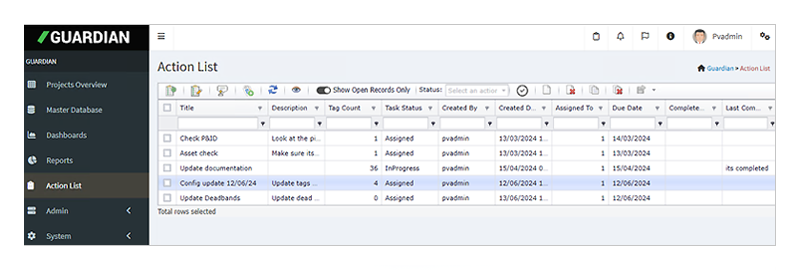
This is where alarm rationalization comes into play. A systematic approach to reviewing and documenting alarms to enhance their usefulness for operators, enabling better management of abnormal situations. To successfully conduct an alarm rationalization improvement project, a series of supporting actions are essential. Managing these actions efficiently can make the difference between a successful outcome and an overwhelming one. Enter ProcessVue Guardian’s new action list, a tool designed to streamline and enhance the management of these supporting actions.

Understanding Alarm Rationalization Workshops

Alarm rationalization workshops are collaborative sessions where operators, engineers and safety engineers come together to review, evaluate and optimize alarm settings. The primary goal is to ensure that every alarm is justified, necessary, and configured correctly to provide clear and actionable information to operators. This process involves several steps:

  • 1 - Reviewing Existing Alarms

    Analyzing current alarm settings to identify redundant, unnecessary, or poorly configured alarms.

  • 2 - Classifying Alarms

    Determining the priority and function of each alarm to ensure they align with operational and safety requirements.

  • 3 - Defining Alarm Limits

    Establishing thresholds and setpoints that trigger alarms, ensuring they are neither too sensitive nor too lenient.

  • 4 - Documenting Rationalization Decisions

    Keeping a detailed record of the rationale behind each alarm's configuration and priority.

  • 5 - Training and Implementation

    Ensuring that operators understand the changes and can effectively respond to alarms as intended.

Each of these steps generates its own set of supporting actions, from data collection and analysis to stakeholder engagement and training. Managing these actions efficiently is critical to the success of the workshop and the overall effectiveness of the alarm system.
The Role of Supporting Actions

Supporting actions in alarm rationalization workshops are the tasks that ensure the smooth execution of the workshop and the implementation of its outcomes. These include:

  • Data Gathering

    Collecting historical alarm data, operator feedback, and system performance metrics.

  • Stakeholder Engagement

    Coordinating with different departments, such as operations, maintenance, and safety, to gather input and ensure alignment.

  • Analysis and Reporting

    Analysing data to identify trends and issues, then reporting findings to the workshop participants.

  • Documentation

    Recording decisions made during the workshop, including the rationale behind each alarm's configuration.

  • Follow-up Actions

    Scheduling further reviews, updates to documentation, or additional training sessions as needed and implementing alarm configuration updates based on agreed changes.

These supporting actions can quickly accumulate, creating a complex web of tasks that need to be managed carefully to avoid delays, omissions, or errors.
How ProcessVue Guardian’s New Action List Enhances Management
Click image to enlarge

How it makes a difference:

  • 1 - Centralized Task Management

    ProcessVue Guardian’s action list provides a centralized platform where all supporting actions can be logged, tracked, and managed. This centralization ensures that nothing falls through the cracks and that every task is accounted for.

  • 2 - Prioritization and Assignment

    The action list allows users to prioritize tasks based on urgency and importance, and to assign them to specific team members. This clarity in task ownership helps distribute the workload evenly and ensures that everyone knows their responsibilities.

  • 3 - Real-time Updates

    As tasks are completed or updated, the action list can be updated to reflect these changes.

  • 4 - Integrated Communication

    ProcessVue Guardian’s action list facilitates communication by allowing users to comment on tasks, comments can take the form of questions, and information updates directly within the platform. This reduces the need for external communication and keeps all relevant information in one place.

  • 5 - Tracking and Reporting

    The action list offers robust tracking features, allowing stakeholders to monitor progress and identify bottlenecks. This visibility is crucial for keeping the workshop on track and ensuring that all necessary actions are completed.

  • 6 - Audit Trail

    Every action, comment, and update within the action list is automatically logged, creating a comprehensive audit trail. This is invaluable for compliance purposes and for reviewing the effectiveness of the alarm rationalization process over time.

ProcessVue Guardian’s new action list is a game-changer for managing the supporting actions involved in alarm rationalization workshops.

Conclusion

Alarm rationalization workshops are essential for optimizing alarm systems, but they involve a wide range of supporting actions that must be carefully managed to ensure success. ProcessVue Guardian’s new action list provides a powerful tool for organizing, tracking, and executing these tasks, helping teams to streamline their processes, reduce errors, and achieve their alarm management goals more effectively.

By leveraging ProcessVue Guardian’s action list, organizations can enhance the efficiency of their alarm rationalization workshops, ultimately leading to safer, more reliable operations. The future of alarm management is not just about refining alarms themselves, but also about refining the processes that support those alarms—and ProcessVue Guardian’s new action list is leading the way.

If you have any questions about this blog post, speak to one of our friendly, experienced team

+44 (0)1246 733120

A New Era in Alarm Response and Governance

ProcessVue - Alarm Response and Governance
PROCESSVUE

Views

Alarm Response Management: Improving Operator Response and Governance

JAMES FOX

JUNE 2026

Control room operators are essential for the smooth and safe operation of critical systems, requiring a blend of technical knowledge, vigilance, problem-solving skills, and effective communication. Effective alarm response management helps ensure operators can respond consistently to abnormal situations while supporting safe, efficient and compliant operations.

When abnormal situations occur, control room operators are tasked with taking corrective action to avert the abnormal situation. Which can range from a simple action such as opening a valve to complex multi-step procedures depending on the situation at hand.

Sounds simple enough until you factor in the number of alarms a site can have configured, a thousand? ten thousand? Or more. That’s a lot of responses to remember. 

An operator’s experience will carry them so far, enabling them to store a set of responses for the regular alarms, but it’s the less frequent alarms that will cause problems.

ProcessVue - Alarm Response and Governance

This is where operator training on alarm responses can help operators to take the correct actions in a timely manner. 

With the advent of Master Alarm Databases businesses are creating databases of their alarms, storing the configurations and adding the supporting information as defined in the alarm management standard (ISA-18.2) such as the cause of the alarm, the consequence of missing and the required operator actions for responding to the alarm.

Thanks to Master Alarm Databases businesses now have a single place to find all of the information about their approved alarms, and operators have access to reference materials and alarm response manuals to help them manage those alarms.

Add to this regular alarm response training and operators should be well placed to manage those alarms and take appropriate action against them. 

All that’s missing is the ability to record and review the operators’ actions in response to the alarms.  Without this information it’s a challenge to assess how operators are performing, making it difficult to provide additional support and training when deviations from procedures occur. 

This is an area where the ProcessVue Analyser and the shift worklist can help.

ProcessVue Analyser is an alarm historian that connects to SCADA and DCS systems, capable of capturing the sequence of events as they occur, it provides alarm analytics helping you to understand your alarm management challenges. 

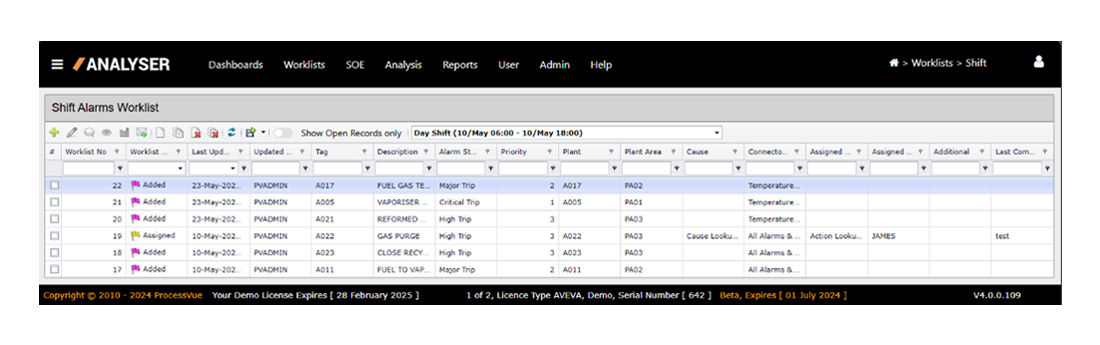
It now also includes a shift worklist, part of the worklists additional module. The shift worklist supports alarm response management by helping you keep track of alarms and the associated operator actions taken during a shift.

Alarms can be added to the shift worklist and assigned to responsible people who can document the actions they take in response to alarms. 

When a shift ends any open alarms can be transferred to a new shift for continuity. The completed shifts, along with the alarms and any comments or recorded actions are stored in the database for future review. 

The shift worklist also features an approval workflow which when used in conjunction with the alarm response manual or other set of documented operating procedures, can be used to demonstrate operator competence and help identify additional operator training opportunities.

How Alarm Response Management Works in ProcessVue

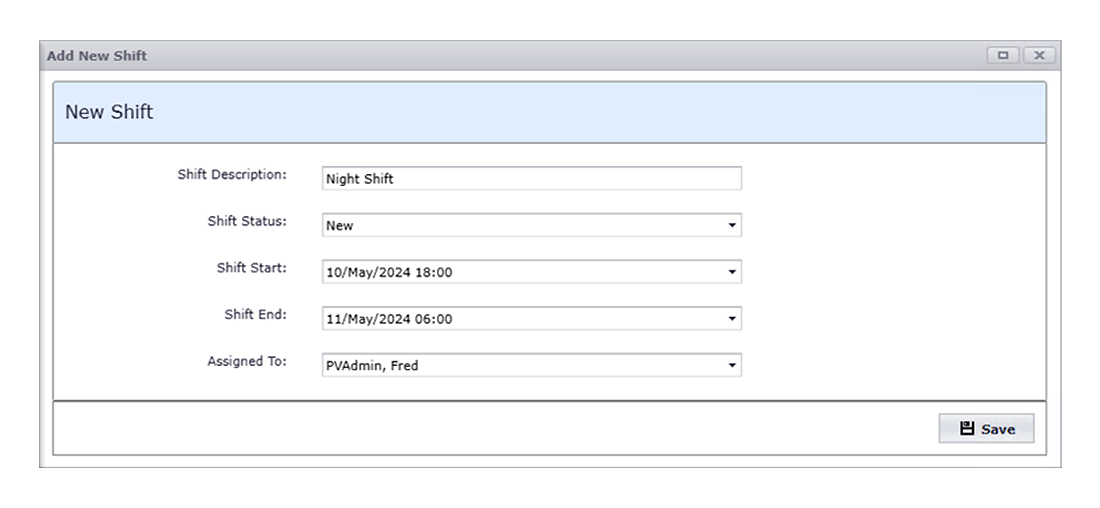
The first step to using the shift worklist is to determine your shift patterns. 

When using the shift worklist for the first time you will be required to create a shift worklist, designating the start and end time of a shift, this range becomes part of a shift pattern and is used to create future shifts

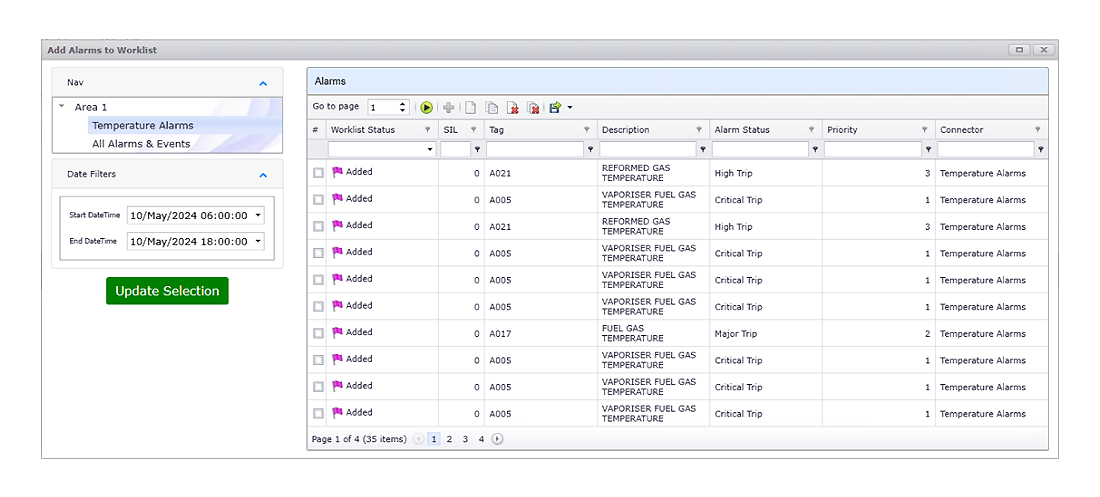
The next step is to add alarms as they occur during the shift. If an alarm occurs multiple times during the shift, the worklist will compress the occurrences into a single instance of the alarm making it easy to record actions and observations against it, regardless of how many times it may occur during the shift.

Once added to the worklist, the alarms can be assigned to operators who can record actions and observations regarding the alarms and when an alarm has been dealt with, it can be marked as complete.

When a shift ends, the current shift worklist can be closed and the worklist enters an approval state, where a user with the relevant permissions can log in and approve the actions, comments, and observations made in response to the alarms. The reviewer can also add additional comments to the alarms during the review stage.

Once reviewed, the worklist is archived in the ProcessVue database and can be accessed later through the shift worklist’s selection option.

Having an audit trail of actions taken by operators against alarms during a shift and being able to compare those actions with alarm response manuals or other existing operating procedures allows us to identify deviations from official responses, paving the way for further support and learning opportunities for operators and helps demonstrates good working practices.

If you have any questions about this blog post, speak to one of our friendly, experienced team

+44 (0)1246 733120

Alarm Enrichment with Metadata

PROCESSVUE

Views

Alarm Event Historian Metadata Enrichment for Better Alarm Context

JAMES FOX
MAY 2024

An alarm event historian becomes more useful when the data it captures has enough context to be understood beyond the original alarm message.

Alarm metadata enrichment adds information such as site, region, equipment type, asset category or operational area to alarm and event records, making them easier to organise, filter, compare and analyse.

The aim is not to overload operator-facing alarms with information they do not need. It is to preserve the alarm’s operational purpose while making the historical data more useful to engineers and managers.

What is alarm metadata enrichment?

Alarm metadata enrichment is the process of adding contextual information to alarm and event records so they can be understood and analysed in a wider operational context.

That distinction matters because an alarm has a specific job. EEMUA 191 describes alarm systems as part of the operator interface, warning operators about situations requiring their attention and helping them respond to abnormal situations.

Once an event has been captured, additional context can help teams understand not only that an alarm occurred, but where it came from, what equipment it relates to and how it should be grouped for later analysis.

What metadata can be added to alarm and event data?

To fully leverage alarm data in a digitalization strategy, it’s imperative to tailor alarms for their intended audience and purpose. This necessitates retooling alarms to ensure they are easily digestible and relevant across different facets of the business.

MetadataExample
LocationRegion, site, plant or process area
AssetPump, valve, compressor or production line
Equipment categoryEquipment type, system or asset class
Operational groupingUnit, network area, production area or business grouping

Consider a water company operating assets across multiple sites. An alarm message may be adequate for the operator responding to the immediate abnormal condition, but less useful when the same data is aggregated centrally.


Adding site, location and equipment context makes it possible to separate events by asset or area without changing the alarm’s operator-facing purpose. This is particularly useful in water and wastewater operations, where assets and alarm sources may be distributed across a wide geographical area.


In this example the water company could aggregate their alarm data with confidence knowing they can pinpoint exactly where the alarm originated and what piece of equipment generated the alarm.

Below is an example of the enriched alarm data with the new information on display.

Why metadata makes alarm historian data more useful

Raw alarm records can tell you that events occurred. Context makes it easier to organise those events into information that can be compared and investigated.

Enriched alarm data can help teams compare alarm frequency by site or equipment category, group events from similar assets, identify recurring patterns and investigate where particular alarm behaviours are concentrated.

ProcessVue Sequence brings alarm streams from multiple operational systems into a consistent, contextual dataset while preserving the source and timing of events. By creating a structured alarm and event history, the data is better prepared for downstream analysis and governance.

Alarm metadata enrichment vs a Master Alarm Database

Alarm metadata enrichment and a Master Alarm Database are related, but they solve different problems.

  Alarm event metadata Master Alarm Database
Main focus Context around collected alarm and event records How alarms are designed, rationalised and governed
Typical information Site, asset, equipment category, source or operational grouping Configuration, rationale, cause, consequence and operator action
Main use Organising, filtering and analysing historical event data Maintaining alarm definitions, governance and approved alarm information

ProcessVue Guardian provides the Master Alarm Database and governance layer within the ProcessVue platform, while Sequence provides the contextual alarm and event data foundation.

The two can complement each other, but they are not the same thing.

From enriched alarm data to better alarm analytics

Metadata enrichment does not provide the analysis by itself. It makes the underlying dataset easier to interpret consistently.

Once alarm and event data is clean, structured and contextual, teams can use analytics to investigate patterns and measure alarm-system performance. ProcessVue Analyser supports alarm-frequency analysis, bad-actor identification, alarm trends and KPI reporting.

This creates a clear division of roles: Sequence prepares and contextualises the data; Analyser uses that trusted dataset to generate deeper operational insight.

Watch the video below to learn more about implementing alarm analytics in ProcessVue Analyser 4.0′.

Do more with your data!

Alarm metadata enrichment:  Frequently Asked Questions

What is alarm metadata enrichment?

Alarm metadata enrichment adds contextual information to alarm and event records so they can be organised, filtered and analysed more effectively. Examples include site, asset, equipment type and operational area.

What metadata can be added to alarm data?

Common examples include location, site, process area, equipment type, asset category and operational grouping. The exact fields depend on the organisation and use case.

Is alarm metadata the same as a Master Alarm Database?

No. Alarm event metadata adds context to historical alarm and event records. A Master Alarm Database manages approved alarm configuration and governance information such as rationale, cause, consequence and operator response.

If you have any questions about this blog post, speak to one of our friendly, experienced team

+44 (0)1246 733120