Views
AI in Alarm Management: From Compliance to Operational Intelligence
JAMES FOX
JUNE 2026
Reflections on global perspectives, practical AI adoption, and the growing role of contextual intelligence in industrial operations
We recently exhibited at AVEVA World in Milan, providing an opportunity not only to showcase our latest developments in alarm management and industrial AI, but also to gain a broader perspective on how organizations around the world are approaching these challenges.
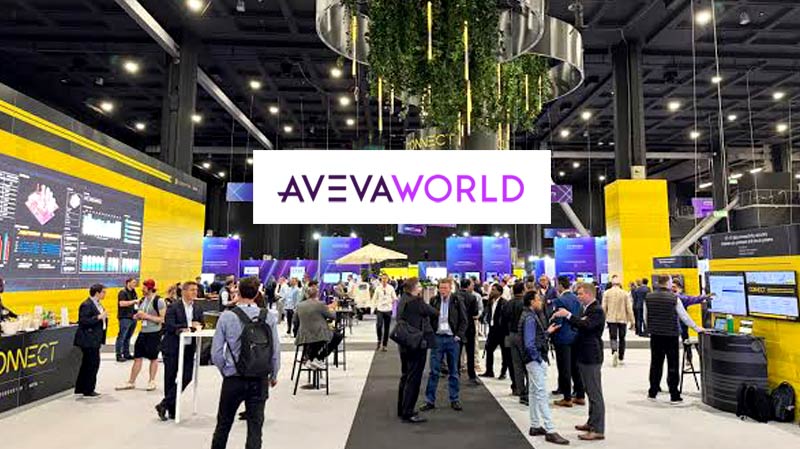
If the recent EEMUA 191 seminar offered insight into how the UK market is thinking about AI and alarm management, AVEVA World provided a much broader global perspective. While the industries and geographies represented were diverse, the themes were remarkably consistent.
Perhaps the most notable observation was how much the conversation around AI has matured.
Not long ago, many discussions centred on uncertainty, risk, and whether AI had a place in industrial environments at all. Today, the focus is increasingly on practical application, governance, and measurable value.
Rather than asking whether AI should be used, organizations are now asking how it can be applied responsibly and effectively.
How AI in Alarm Management Is Moving from Curiosity to Capability
One of the strongest themes emerging across industry is the transition from experimentation to practical application. Organisations are becoming less interested in AI as a technology and more interested in the outcomes it can help deliver.
This was particularly evident in the interest surrounding AI-enabled alarm management. The focus was not on replacing people or introducing unnecessary complexity. Instead, the emphasis was on reducing effort, accelerating investigations, improving access to information, and supporting better operational decisions.
Tasks that might traditionally require hours of manual analysis can now be completed in seconds, allowing alarm managers to spend less time gathering information and more time improving performance. AI also has the potential to investigate alarm relationships, identify recurring patterns, support first-up alarm analysis, and provide operators with contextual information when it matters most.
What is changing is not simply the technology itself, but the industry’s willingness to explore where it can provide genuine operational value.
Why Alarm Management Is Becoming Operational Intelligence
For quite some time now, we have believed that the future of alarm management lies not simply in generating more data or more alarms, but in transforming alarm data into operational intelligence.
Historically, alarm management has often been viewed through the lens of compliance. While standards and performance metrics remain essential, there is growing recognition that alarm systems represent a valuable source of operational insight.
Alarm data captures process behaviour, operational states, abnormal situations, and human interaction with systems. Effective alarm analytics and alarm rationalization help organizations understand this information, identify opportunities for improvement, and make more informed decisions.
When contextualised and analysed effectively, alarm data becomes far more than a compliance exercise. It becomes a foundation for optimization, continuous improvement, and better operational performance.
This shift from compliance towards operational intelligence aligns closely with our own long-term thinking and was reflected consistently throughout the event.

How AI Connects Operations and Engineering Teams
The value of industrial AI extends across multiple domains.
Operators benefit from immediate access to alarm priorities, causes, consequences, and response guidance, helping improve situational awareness and decision-making at the point of action.
Engineering teams gain rapid access to alarm configurations, performance data, historical decisions, and governance information, helping them investigate issues and implement improvements more effectively.
The real opportunity, however, emerges when those domains are connected.
AI has the potential to bridge the gap between operational experience and engineering governance, providing the context needed to identify issues, understand their impact, determine solutions, and manage change.
When operational insight and engineering governance are connected, organizations can move more effectively from identifying opportunities to implementing improvements. Analysis, rationalization, governance, and change management become part of a continuous improvement process rather than isolated activities.
In doing so, organizations can close the loop between insight and improvement.
Why Governance Matters for Industrial AI Adoption
As AI adoption continues to increase, governance is becoming just as important as capability.
The value of industrial AI does not come from the technology alone. It comes from providing context, structure, and access to trusted operational information.
Without context, AI struggles to deliver meaningful outcomes. Without governance, organizations struggle to trust and sustain the decisions being made.
This is why there is growing recognition that successful AI implementation requires more than simply connecting a model to a data source. Structured alarm information, operational knowledge, engineering controls, and established governance processes all play an important role in delivering accurate, relevant, and actionable outcomes.
This is where approaches such as ProcessVue’s AI Gateway become particularly relevant.
By combining operational insight, engineering governance, and contextual intelligence, organisations can begin exploring AI in a controlled and measurable way. The result is not simply faster analysis, but a practical pathway towards better decisions, alarm management improvement, continuous improvement, and closing the loop between identifying issues and resolving them.
What AVEVA World 2026 Revealed About the Future of Alarm Management
What became clear at AVEVA World is that organizations are no longer asking whether AI belongs in industrial operations.
They are asking where to start, how to realise value, and how to do so without introducing unnecessary risk.
The pace of change is increasing, but so too is the understanding of how AI can be applied responsibly. The opportunity now lies not in adopting AI for its own sake, but in using it to unlock the value already contained within operational data.
For alarm management, that means moving beyond compliance and towards operational intelligence.
For organizations willing to embrace that shift, the potential benefits are significant.

AI in Alarm Management: Frequently Asked Questions
AI can accelerate alarm analysis and alarm analytics by identifying patterns, investigating relationships, and uncovering opportunities for improvement in seconds rather than hours.
Context ensures AI delivers accurate, relevant, and actionable insights by combining alarm data with operational knowledge and engineering controls.
Operators gain faster access to alarm priorities, causes, consequences, and response guidance, while engineers can investigate performance, review configurations, and identify improvements more efficiently.
Alarm data provides valuable operational insight. When analysed effectively, it supports optimization, continuous improvement, and better decision-making beyond compliance alone.
By starting with focused use cases, strong governance, and trusted operational data. Approaches such as the ProcessVue AI Gateway allow organisations to explore AI in a controlled, measurable way while maintaining confidence in the outcomes.
Talk to an Expert
See how ProcessVue can enhance your alarm management strategy.